
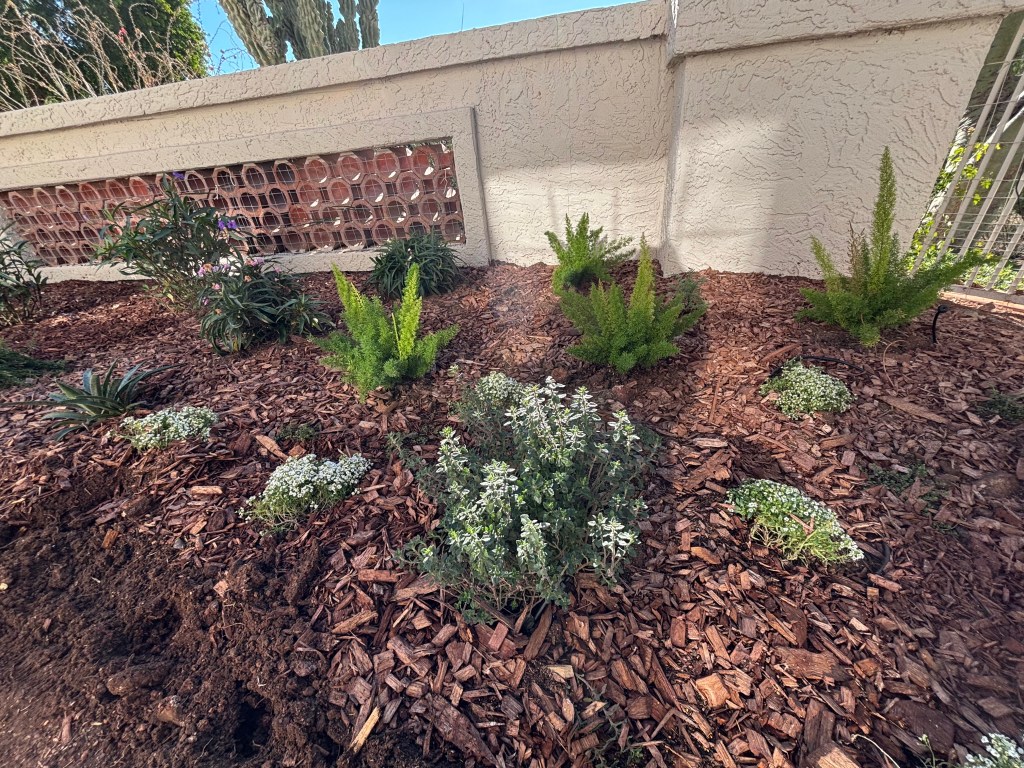
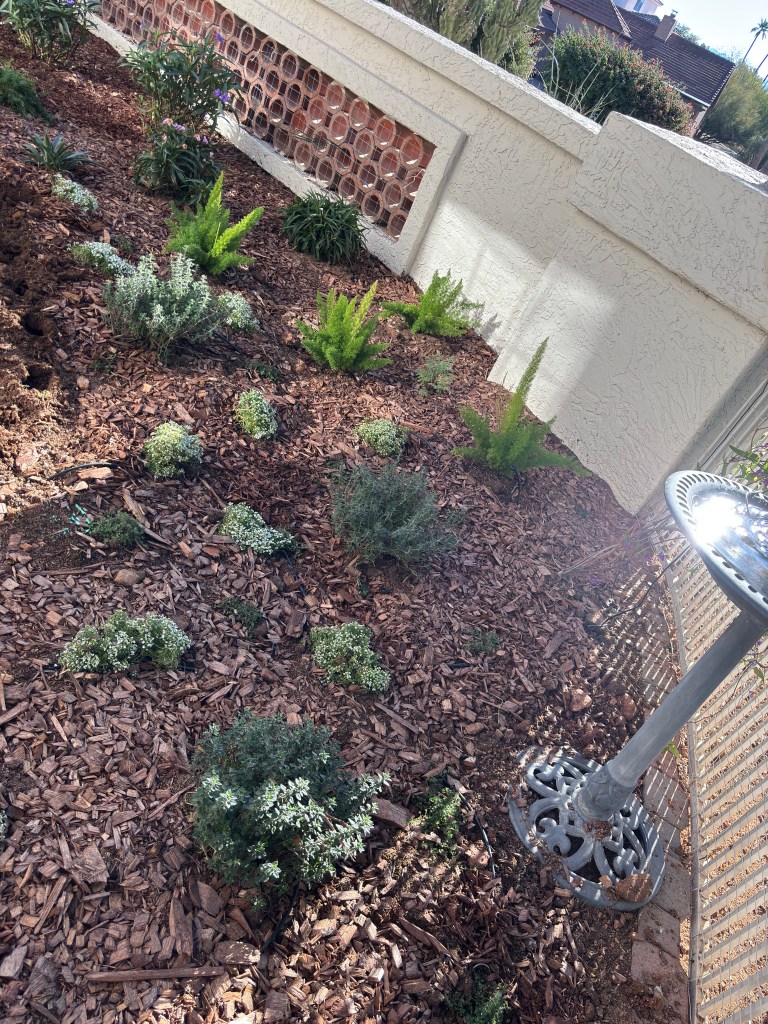
Delicate plants and tropicals have a place in Phoenix gardens, despite the tough conditions of low desert yards. With some soft treatment many green and tender plants grow surprisingly well here. Plants like star jasmine, herbs and veggies, birds of paradise, myrtles, hibiscus, roses, and plumeria can all thrive in the low desert with some help. Ideally, pampering your garden starts before the installation, during the planning stage. However there are also ways to improve the conditions for existing shrubs and flowers that could use a little extra love.
location Location Location
Planning ahead to build a lush and green garden starts with choosing a gentle location. No amount of water can replace the relief plants get from afternoon shade and/or the dappled shade of a desert tree. A few hours of direct sun in the morning provides enough energy for most tropical or sensitive plants in Phoenix, but too much sun in the summer afternoon only stresses delicate plants. An eastern exposure is lovely if available.
Passive Rainwater Harvesting
It’s also better to avoid planting on a slope because landscaping shrubs on an incline dry out faster and receive less benefit from rain. A gentle hollow holds mulch better and catches runoff to soak down into the soil around the roots of plants. Swales can slow the passage of running water from a monsoon storm to give it time to absorb into the ground instead of being lost to the street. Planting large shrubs and trees with their own basins will benefit the development of healthy roots.
Groupings
The design of the planting matters too. For sensitive plants I like to put them together in groupings instead of spacing them out to dry. Plants shelter each other and shade each other’s roots. I can also install emitters between the plants in a grouping to encourage them to grow more resilient roots.
Soil preparation
Soil preparation can take place after a location is chosen and before the plants are installed. A simple step that makes a huge difference is to break up the ground all around the planting area. Our soil in front and backyards tends to be compacted from the building process, and many areas of the valley have heavy clay soil. I like to dig planting holes several times wider than the width of the pot if the soil is bad. I might also break up the top foot of soil with a shovel between the planting holes if I’m planting a grouping.
Another soil preparation method is to spread compost over the soil after planting, before mulch or gravel mulch is added. Desert soil tends to be very low in organic material. How much compost I add depends on the sensitivity of the type of plant I’m installing. Hibiscus appreciates lots of organic matter for example, while a foxtail fern doesn’t need as much. A layer of wood mulch over the ground helps plants a lot.
Continuing Kindness for the Garden
Maintenance of tropical and delicate plants is simpler. An application of compost once a year keeps the soil healthy and nutrient filled. A thick layer of mulch topped up every year or two will keep water from evaporating, break down into useful nutrients, and will acidify our alkaline desert soil. I was working with someone who moved into a new development with awful clay soil. We added a 3” layer of mulch to the planting bed in the backyard, and without any other intervention the soil was completely transformed after two years. Sticky clay that was rock solid when dry became dark, crumbly, rich garden soil to a depth of more than a foot.
Changing the irrigation frequency is important for maintaining healthy plants. Of course we need to increase the water over the summer – but did you know that many plants prefer not to be overwatered when the weather is cooler? Changing the schedule two to four times a year is ideal. It’s also important to water deeply and not every day. Shallow waterings every day stress plants. Even something tropical can handle being watered once or twice a week during the summer if it is getting watered deeply around its root zone. How to water properly is a subject all by itself in the Arizona desert. In my opinion many homeowners are applying more water than the plants need, and could save water and improve their plants’ condition at the same time.
Offering Consultations
Thanks for reading this guide to pampering landscape plantings in the Phoenix area. I offer consultations to give personalized advice to homeowners in the east valley, and I do design and installations as well. I’m a certified nursery professional in AZ and a Maricopa county Smartscape certified landscaper. I don’t use AI to write anything.
 Paige Maloney | Arizona Landscape Designer
Leave a comment