
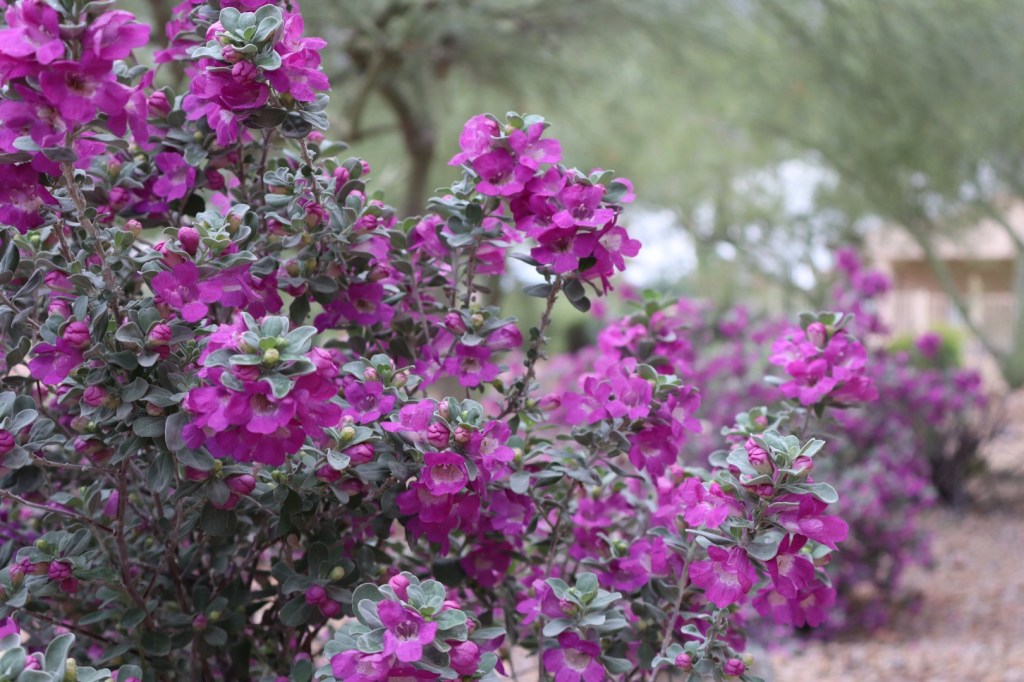
I think it goes without saying that low desert yards are challenging places to plant, especially without a dedicated irrigation system to supply water. It’s definitely possible to hand water a wide variety of plants out here – watering deeply and less often will train their roots to become more drought tolerant and resilient.
That being said, some plants are especially well suited to being installed somewhere without an irrigation system. Some plants can’t handle the regular watering schedule of an irrigation system and perform better when allowed to dry out. These plants below are great choices for dry yards because they can handle drought conditions well and even thrive.
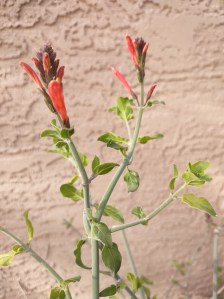
Chuparosa (Justicia californica)
This native shrub defies normal landscaping situations. It doesn’t want to be trimmed much, it won’t conform to a neat shrub shape, and it drops its leaves at the first sign of drought. However hummingbirds adore the red flowers that appear off and on all year. The flowers are even edible and taste like cucumbers. These plants are a reminder that we should have some grace for desert plants because they’re worth having around even if they don’t act like we expect. They are good for areas without irrigation systems because they bloom better when drought stressed. Chuparosas with emitters are often a missed opportunity because they grow more vegetation when they have regular water and stop growing flowers. Throw one in the corner though and watch it bloom year round.
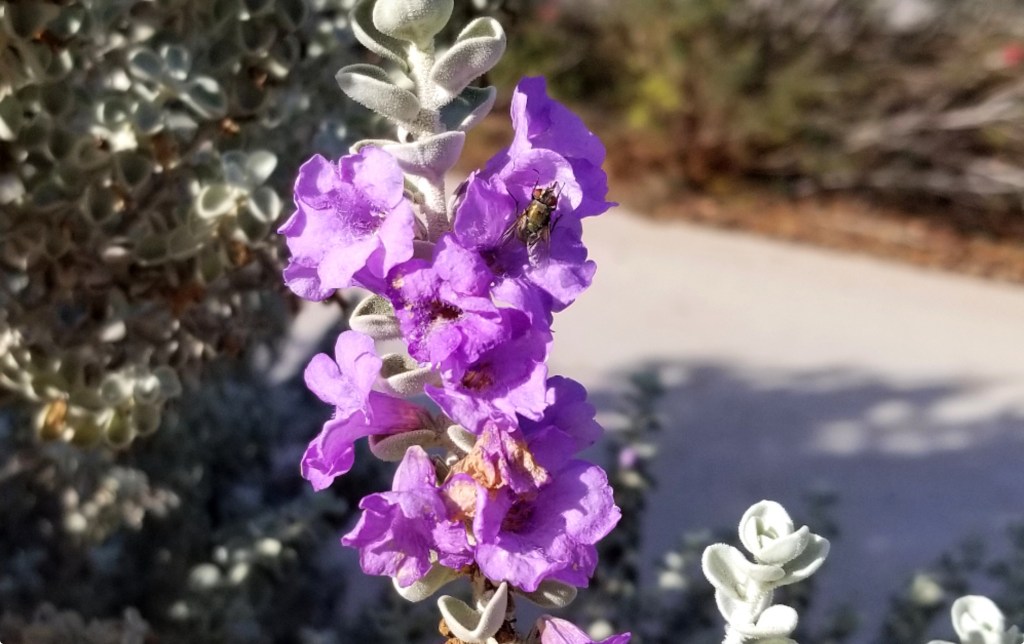
Texas blue ranger (Leucophyllum zygophyllum)
This silvery shrub throws out blueish flowers in response to summer rain. It is basically the toughest of the tough desert plant for full sun and no water. Once established it might not need any supplemental water ever again if it’s getting rain from time to time. This shrub can take sun from sunrise to sunset without any problem. It’s more likely to be overwhelmed from being on a drip system.
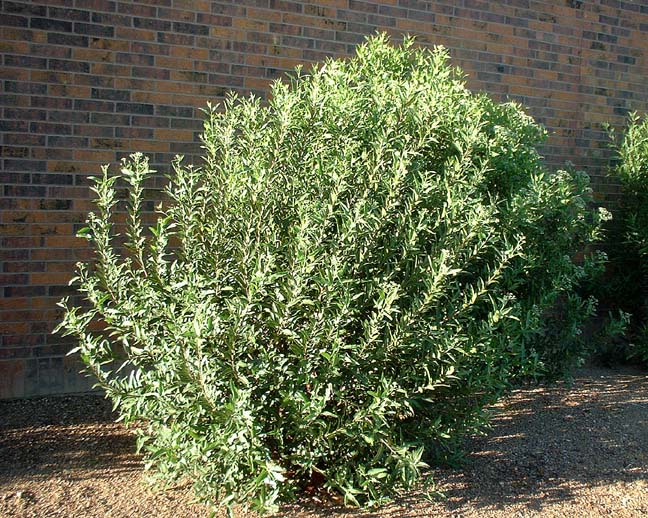
AZ Rosewood (Vauquelinia californica)
The Arizona rosewood is a large shrub or a small tree that has serrated dark green leaves. It is a great low-water replacement for oleander, if slower growing. It blooms in spring. This is a nice shrub for fencelines and farflung corners of the yard where the irrigation doesn’t reach because it really doesn’t seem to need much water. I planted one in a completely full sun area and it never appeared wilted or yellowing even while other trees planted at the same time did. Be sure to dig a wide basin around it and flood it several times a month during the first summer, then less often after that.
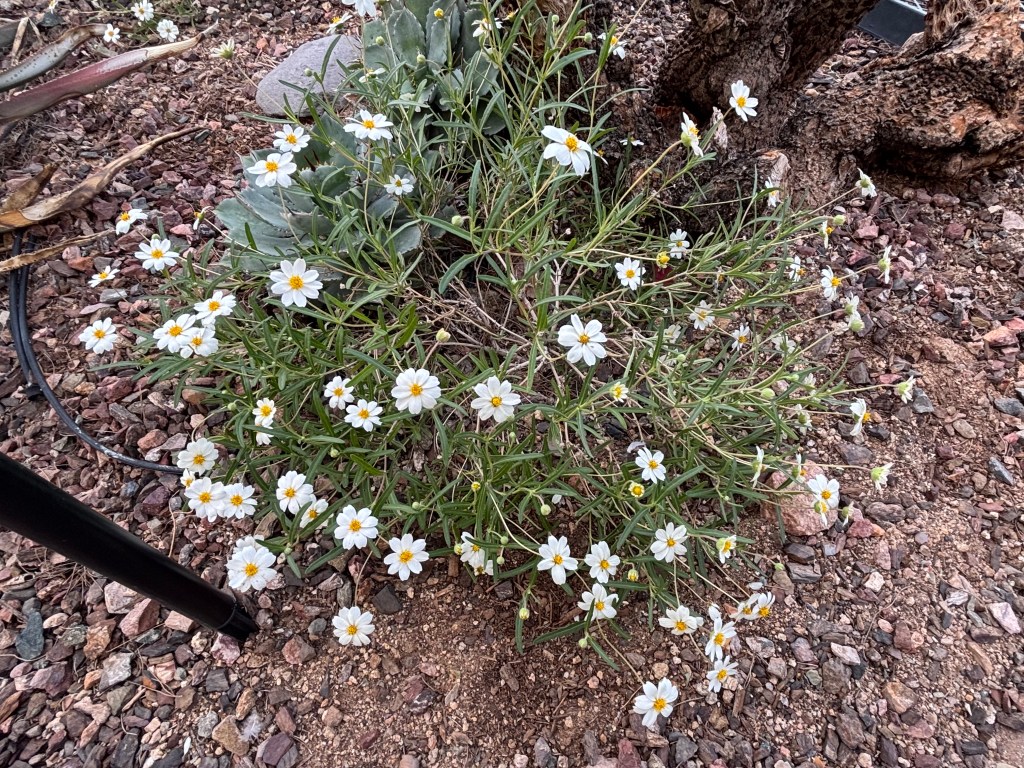
Blackfoot daisy (Melampodium leucanthum)
This is a small perennial groundcover that makes tons of white flowers with yellow centers. I’m discovering that it grows much better with occasional water than the regular water of most irrigation systems. Blackfoot daisies that get water once a week or less will prioritize flowers over leaves, and will hold themselves up to form an airy mound. Blackfoot daisies that receive water every day will be flat and unhealthy. One time I saw one that had sprouted in the yard away from any emitters and it looked so much better than the irrigated ones.
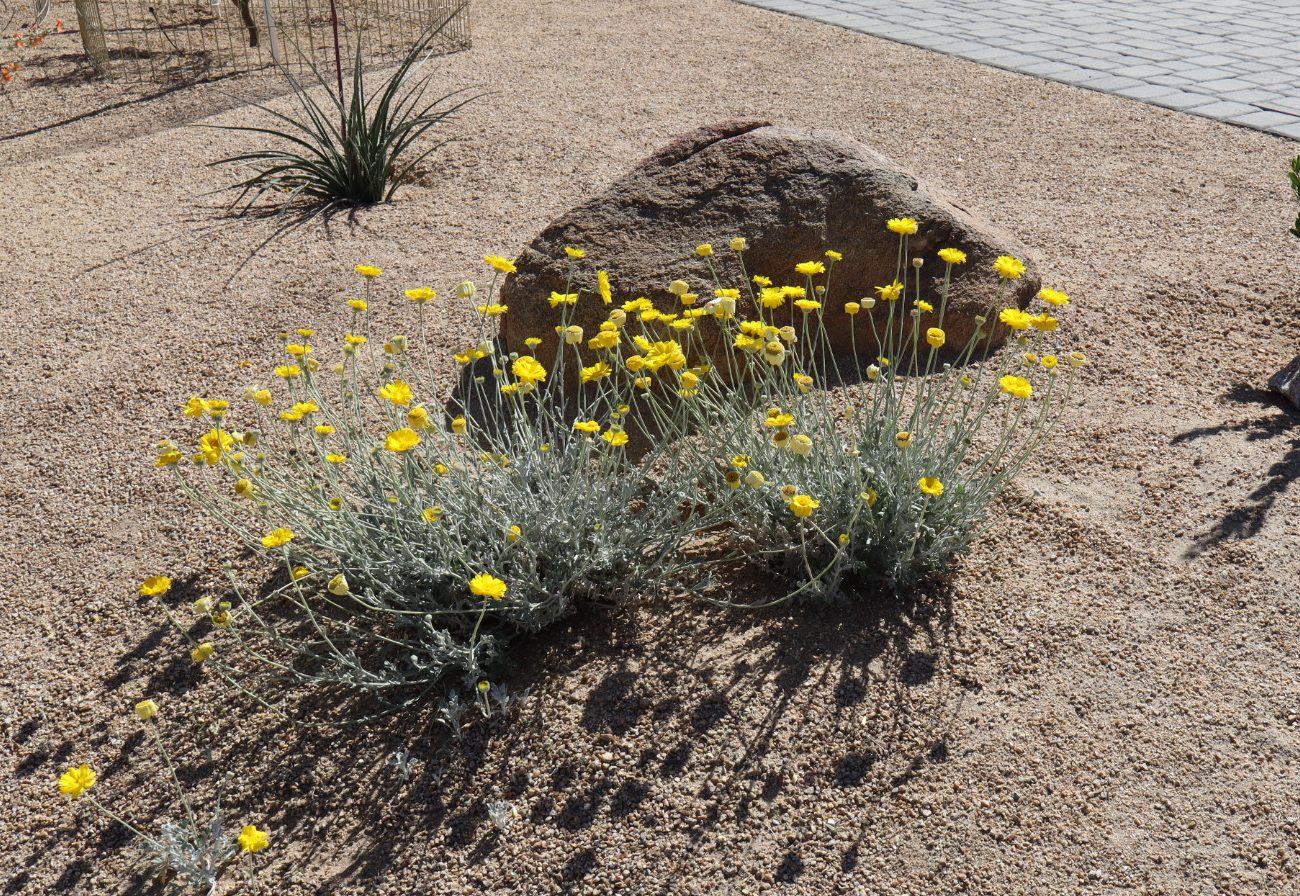
Desert marigold (Baileyi multiradiata)
This is another native flowering groundcover that can be found on the roadsides in and around the McDowell Sonoran Preserve. Bright golden flowers appear above silver foliage almost all year. They don’t love growing in pots and are therefore very difficult to find in nurseries. I like to grow them from seed on gravelly soil and slopes. They can do pretty well on irrigation systems but they might end up overly heavy and drooping under their own weight. A stand of desert marigolds will be pretty much self sufficient, appreciating a drink of water a few times a year at most.
 Paige Maloney | Arizona Landscape Designer
Leave a comment