
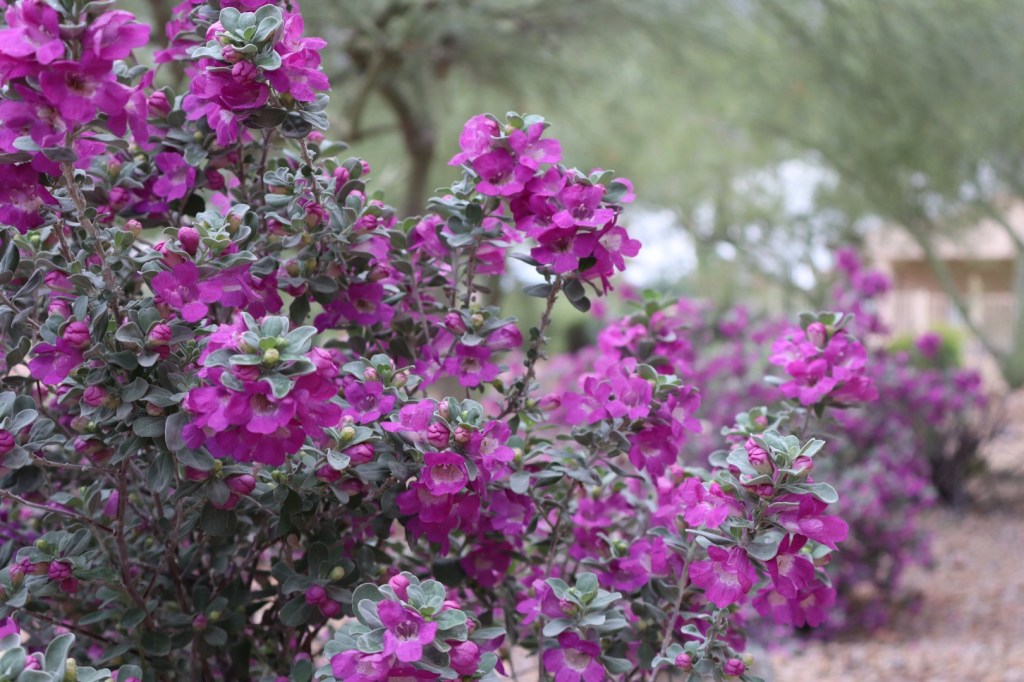
These last few weeks of ample rainfall have set off the Texas sage. These shrubs that blend into the background most of the year suddenly look like thickly frosted cakes on the side of the highway. A bloom as intense as the one we’re having now is a nice way to showcase the different forms of this versatile and beautiful shrub.

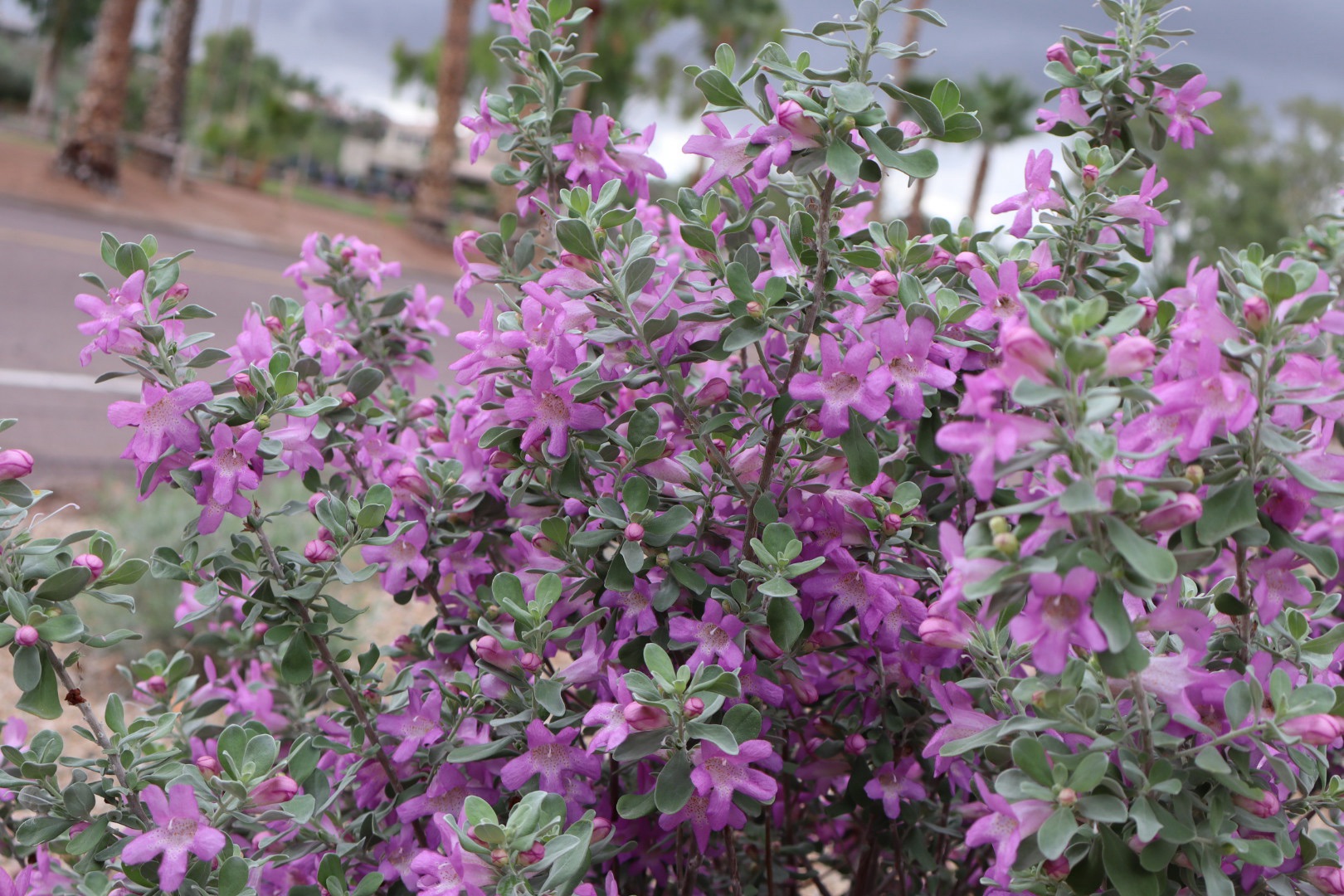
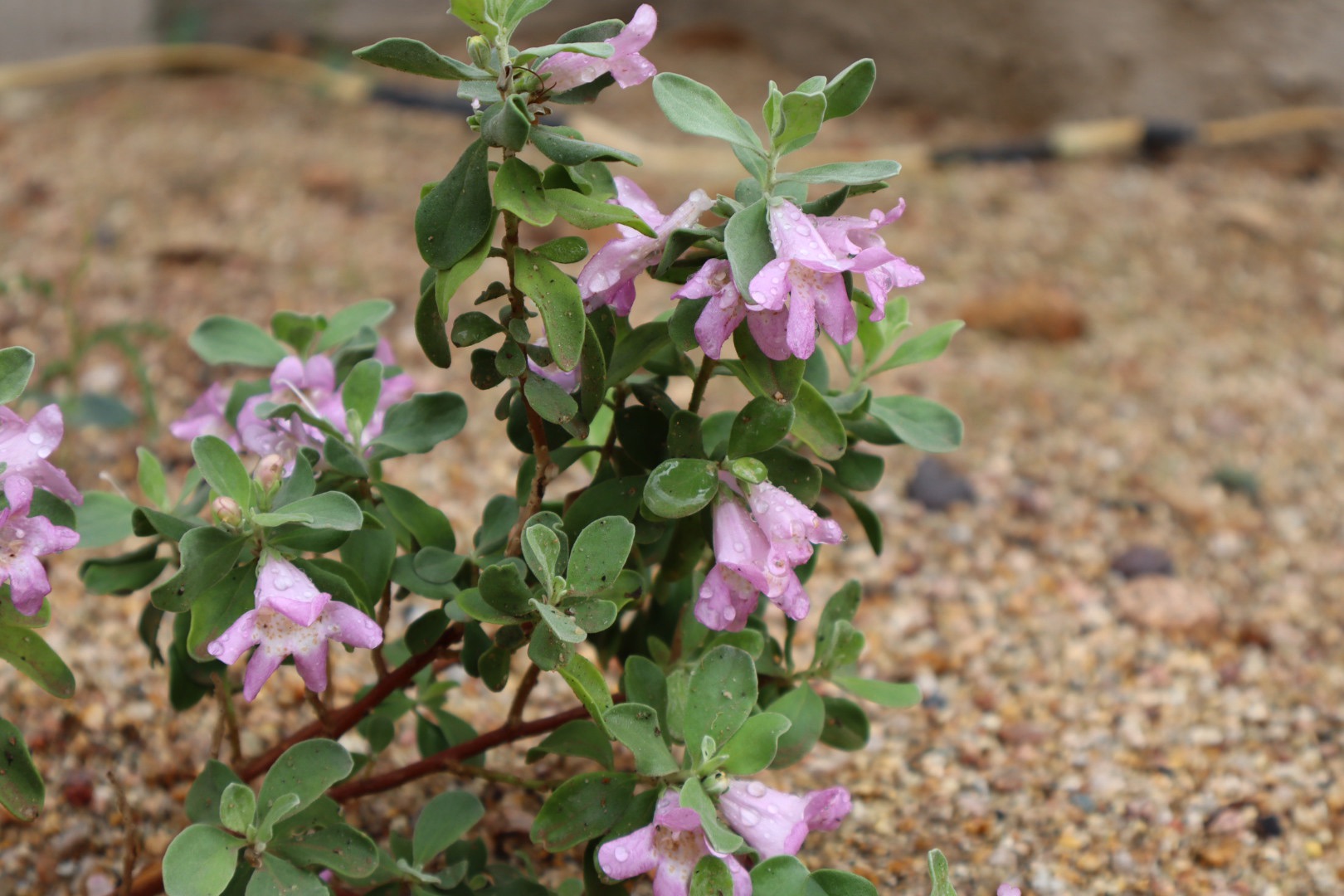

Some varieties of Leucophyllum that bloom especially well include Civano’s San Antonio Rose, L. langmaniae Lynn’s Legacy (a classic developed by Lynn Lowrey), ‘Convent’ sage, Heavenly Cloud sage (updated form of the Green Cloud), White Cloud sage (a variety with white flowers if you can find it) or L. frutescens ‘Rio Bravo’.
Any Texas sage will be sun tolerant and drought tolerant, but they can grow to wildly different sizes! Be careful you know which plant you’re getting.
And now, the downside to Leucophyllum
Texas sage is dormant during the short days of winter and spring. Growth and flower production happen during the hot season when the days are longest and now in October they’ve put on a big show while they’re winding down for the year. Monsoon storms are the best opportunity for a big flower show in the low Sonoran desert.
It can be a little frustrating to have plants in the garden that need to be dormant every year. There’s no way to keep a Texas sage awake for the winter using water or fertilizer or anything else. (Under a sun lamp would probably work but obviously not for the landscape.)
We just need to wait until they decide to wake up in late spring.
Leucophyllum are Invaluable for the Desert Garden
We are all seeing the benefits of having it around this week in terms of flowering potential. Beyond that, Texas sage is useful for difficult landscaping spots and they support the pollinators.
Texas sage ( or Texas rangers) can take full western exposure, southern exposure, and reflected heat even in the urban Phoenix heat island. This is extremely helpful because there are so few shrubs that can tolerate our full sun conditions so well.
They are an easy shrub to install and maintain without an automatic watering (drip) system. Dig a basin around a planted 1 or 5 gallon to simplify the watering- just pour a generous amount of water into the basin (minimum 1L for a 1g container planting and probably more like 4L or 1gal on a freshly planted 5g container). Watering schedule depends on soil type and light exposure and other variables, but I would be comfortable saying a new Texas sage can be watered once a week or twice a week, even during its first summer. They’re incredibly forgiving of drought.
Being from a nearby desert, Texas sage fit seamlessly into our Sonoran landscaping. Find them at any plant nursery but research the varieties first.
I’m a certified nursery professional and a Smartscape trained landscape designer in the east valley Phoenix area. Please reach out to schedule a consult for garden designs, installations, and troubleshooting.
 Paige Maloney | Arizona Landscape Designer