
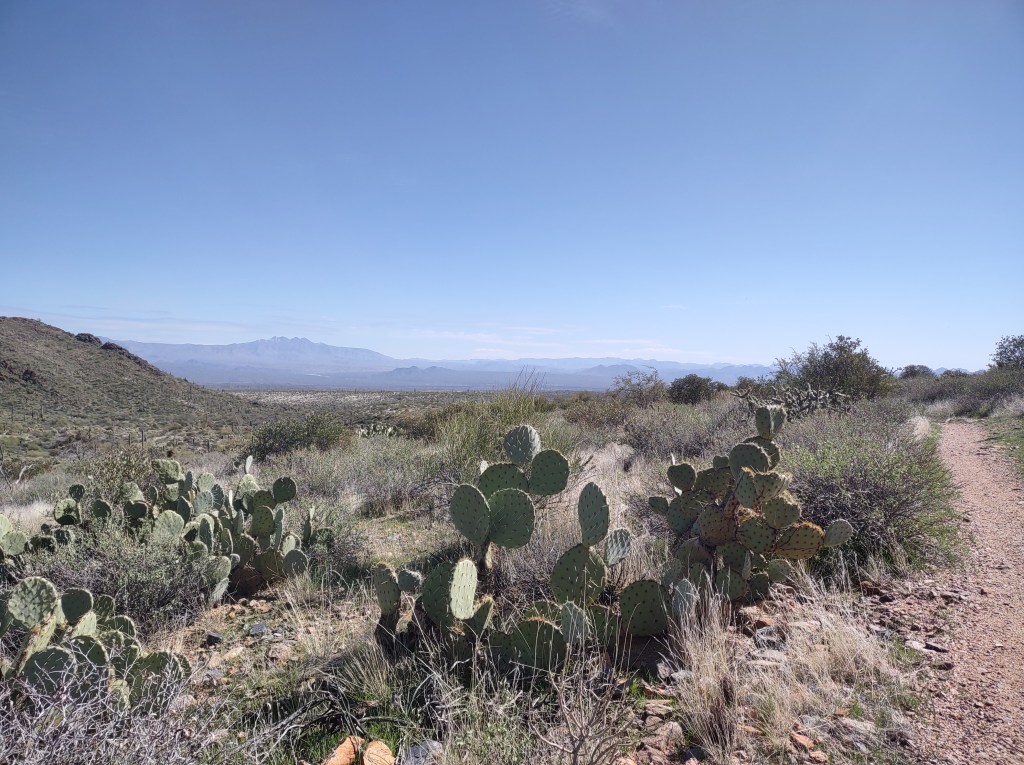
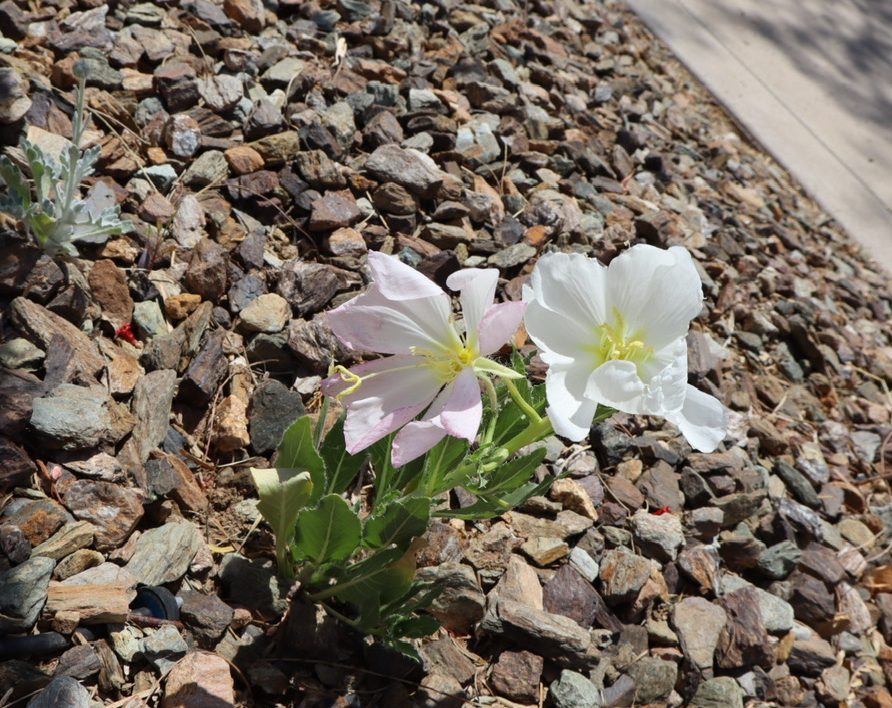
Phoenix is an urban environment in a hot desert. Because of concrete roads, sidewalks, and walls, the city environment has more extreme microclimates than the desert surrounding it.
The desert outside of Phoenix is actually better for plants than the city in some ways. Heat is trapped by the inversion layer that settles over Phoenix part of the year. High temperatures at night are especially damaging to plants during the summer because the plants and animals can’t cool off before the next hot day. Concrete and other building materials radiate heat long after the sun is down.
Furthermore light is reflected from our buildings onto the landscape making the rays even more intense than they already are. The most intense hotspots I tend to see are plantings directly next to a wall facing south or southwest; without shade from trees these plants are getting the full intensity of the sun almost all day, as well as even more light and radiated heat from the light-painted wall. The difference between the city and the natural desert is that we in the city can support our plants with extra water and planning to reduce the impact of hotspots on our landscaping.
Which Parts of the Yard are Hottest?
Some hotspots in a yard are easy to see from a distance. The influence of the hot afternoon sun makes a huge difference in temperature and intensity. Any area of a yard that is baking at 3pm in the low desert next to a driveway or hot wall is guaranteed to be too difficult for all plants except the most resilient desert survivors.
Roads, sidewalks, and walls reflect heat onto nearby plants. Assume that any area near one of these structures will be more intense during the summer than a similar area without the reflected heat.
Raised areas in a yard can be difficult spots to plant because the soil will lose moisture faster and the exposed area may be more vulnerable to sun and wind.
Large open areas without shade can be hostile environments for most landscape plantings. Neighboring plants cast shade, add organic material to the soil, and emit humidity into the air around them. Without plants nearby the desert landscape becomes a wind swept oven during the summer.
Another way to identify hotspots is through observing the plants themselves. If you have several of the same plant throughout the yard, is there any difference in the way they are growing? Is there a corner where the plants appear stunted, yellow, or have died completely? If the answer is yes, and this area gets lots of sun during the afternoon, you probably have a hotspot.
How to Work With Hotspots
Now that we’re towards the end of summer it’s time to think ahead because planting season is right around the corner. Damage from hotspots will be easiest to identify now, because most plants recover over the winter and by the time spring is here it will be hard to remember how awful these locations are.
First it’s always important to install hardy plants in these tough spaces. Most plants struggle in hot spots but there are a few plants that can shrug off the hottest summers.
Planting desert trees like palo verde is always a good idea for hotspots. A few years after planting, the trees will transform a hotspot into a comfortable area for a much wider range of plants. Trees and large shrubs (and manmade shade structures) stop hotspots from existing.
Adding shade is the best solution for hotspots but I’ll also give tips on how to work within an extreme area if trees aren’t an option.
For larger spaces, try Texas sage (Leucophyllum sp), red bird of paradise (Caesalpinia pulcherimma), yellow bells (Tecoma stans) or little leaf cordia (Cordia microphylla) with/instead of classic plants like bougainvillea and oleander (reminder that oleander is highly toxic!). Texas sage and cordia are better for desert-themed plantings and red bird and yellow bells add a tropical look. These plants are so adapted to the sun and heat that they actually do worse in the shade, even bright shade. Save them for harsh sunlight areas. The extra sun will generate more flowers.
For smaller areas use red yucca (Hesperaloe parviflora), angelita daisy (Hymenoxis acaulis), desert marigold (Baileyi multiradiata) or Parry’s penstemon (Penstemon parryi). Lantana are often planted but they can struggle to stay green in very intense locations. Try purple trailing lantana for a more drought-tolerant lantana variety.
Lady Bank’s rose is a vine that can withstand extreme heat and sun. This vine grows vigorously so be sure to give it lots of space.
It’s a common misconception that succulents and cacti all do well in the toughest environments. Our hotspots are actually too intense for many species such as golden barrels and saguaros. Many cacti yellow and burn in reflected heat. If you want to plant succulents in a hotspot, fill the area with shrubs and greenery and dot the area with succulents to give them shade and cover.
For potted plants, use hardy flowers like vinca during the summer. Add a thick layer of mulch and use irrigation tubing with drips every 6” to water the entire open surface of the pot. Geraniums do well in full extreme sun during the winter when the temperature is better (remember they need deadheading and prefer to dry out a little more than most flowers.)
For in-ground plantings, I like to amend the soil extra nicely when planting in extreme spots. When planting, I break up the soil in a large radius around the plant. This helps the roots grow quickly and be more tolerant of drought. For shrubs I like to mix in compost to the top couple of inches of soil before pulling gravel mulch over the top.
I split emitters so that the center of the root ball gets a little water and there are also emitters around the plants to wet the soil in a broader area, again to encourage roots to grow out in a healthy way. I use planting staples to secure the emitters so that in a year or two I can come back and move the emitters farther out. The roots will keep stretching outwards as the plant gets established. This is important to do for most plants but especially those in extreme areas.
For hotspots it’s especially important not to plant after April or before October, to avoid stressing the new plant before it has a chance to get established. Watch newly planted hotspots during their first summer and be ready to water extra if needed. A weekly watering with the hose is a good idea for most plants over the summer here.

I’m available for consultations in the east valley from October through April. I’m a certified nursery professional in AZ and a certified smartscape landscaper in Maricopa County. I do landscape design, advice, plantings, and seasonal upkeep for homeowners in east valley Phx. I’m fully insured.
 Paige Maloney | Arizona Landscape Designer
Leave a comment