
The harshest learning curve in desert gardening is probably the realization that beloved full-sun plants from other parts of the world like lavenders and roses just can’t handle afternoon sun during the summer months here in the low desert. Plants limping through June, July, and August suffer from sunburn, dieback, and attacks from pests when they’re placed in more sun than they can handle. Proper plant placement is the key to having a low maintenance landscape in Phoenix.
Researching how a plant does in the low desert is important but requires some digging. Tags that come with plants might give information for the wrong climate, and it’s not so common to find websites with plant information for our USDA zones 10-11 specifically.
For determining where a plant can grow in uniquely harsh places like our beloved desert, it’s better to check with local sources than to consult the internet at large. The cooperative extension, ASU landscape library, or local landscape blogs like the AZ Plant Lady blog can help verify how much sun the plant can take here in the Valley specifically. My blog, also, is dedicated to helping people feel more confident and informed about their desert landscape.
Overview of Sun Exposures and Examples of Plants that will Thrive There
Full Sun and Reflected Heat

Only the toughest of tough plants can survive here. You’re working with an extremely limited palette of plants. SW exposures surrounded by concrete or walls are guaranteed to stress plants during the summer and only a few plants can shrug that off. Try Texas blue ranger (Leucophyllum zygophyllum), red yucca (Hesperaloe parviflora) or red bird of paradise for a splash of tropical color (Caesalpinia pulcherrima).
Plants found on the banks of the freeways in Phoenix are good examples of ultra tough, large, flowering shrubs. Bougainvillea are in this category, as is the little-leaf cordia (Cordia parvifolia).
A common myth is that the mighty saguaro is tough enough to handle reflected heat. This is actually not true – saguaros need to be in full sun but they are not thriving when surrounded by concrete. I would put saguaros and many other cacti in the next category of full sun without reflected heat.
Full Sun without Reflected Heat
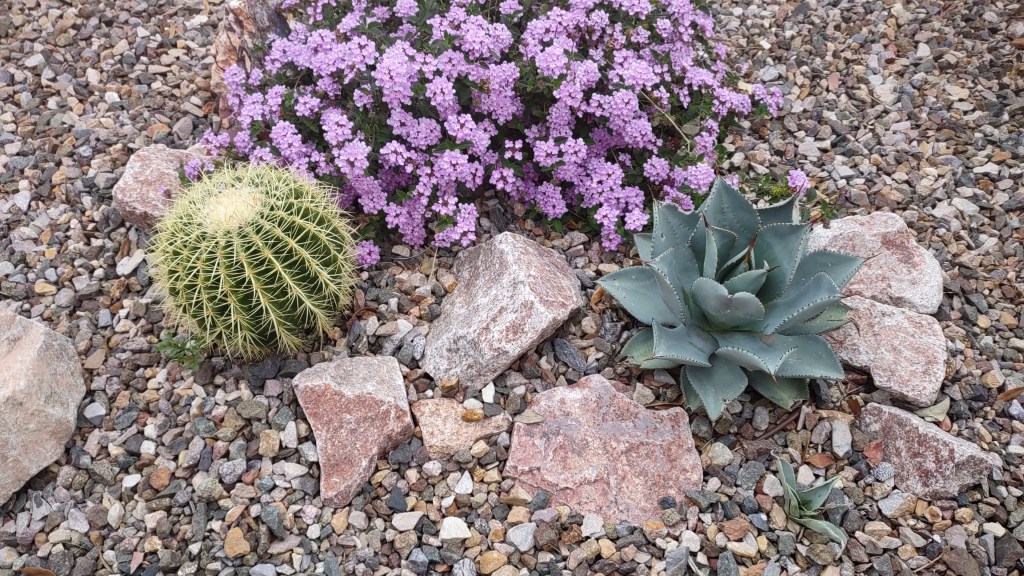
This category includes a much wider range of plants than full sun with reflected heat. Many native and nonnative plants can handle full sun: like the Parry’s penstemon (Penstemon parryi), brittlebush (Encelia farinosa), various seed grown annuals and perennials like desert bluebells, primroses, and desert marigolds, all Texas sage shrubs (Leucophyllum spp), Cassias (Senna spp), fairy dusters (Calliandra spp), baja ruellia (Ruellia peninsularis), creosote (Larrea tridentata), bougainvillea, desert milkweed (Asclepias subulata), and desert trees like the palo verde and mesquite.
Lantanas are a classic nonnative flowering shrub that does well in full sun in the valley. Aloe vera is a succulent that can be planted in full sun but looks better with some shade – try elephant food (Portulacaria afra) for a more suitable full sun succulent.
Many bedding flowers are full sun during the winter in the low desert. Geraniums and petunias are two examples of hardy full sun flowers as long as the temperature is mild. A good rule of thumb is that full sun flowers in colder parts of the world are also full sun flowers in Phoenix but will probably only be available from October through May. Summer bedding flowers are a different beast. Use vinca and potato vine from June through September for vigorous growth in full sun containers.
Many cacti can handle full sun in the low desert, though most struggle with reflected heat. Organ pipe cactus (Stenocereus thurberi), saguaro (Carnegia gigantea), hedgehog cacti (Echinocereus engelmanii), and many species of agave do well in the full sun. For a hyper local agave that doesn’t take up much space try the Murphy’s agave (Agave murphyi). This ancient cultivar developed by the Hohokom is very well adapted to the valley since it’s been growing here for hundreds of years.
Afternoon Shade and/or Dappled Sun
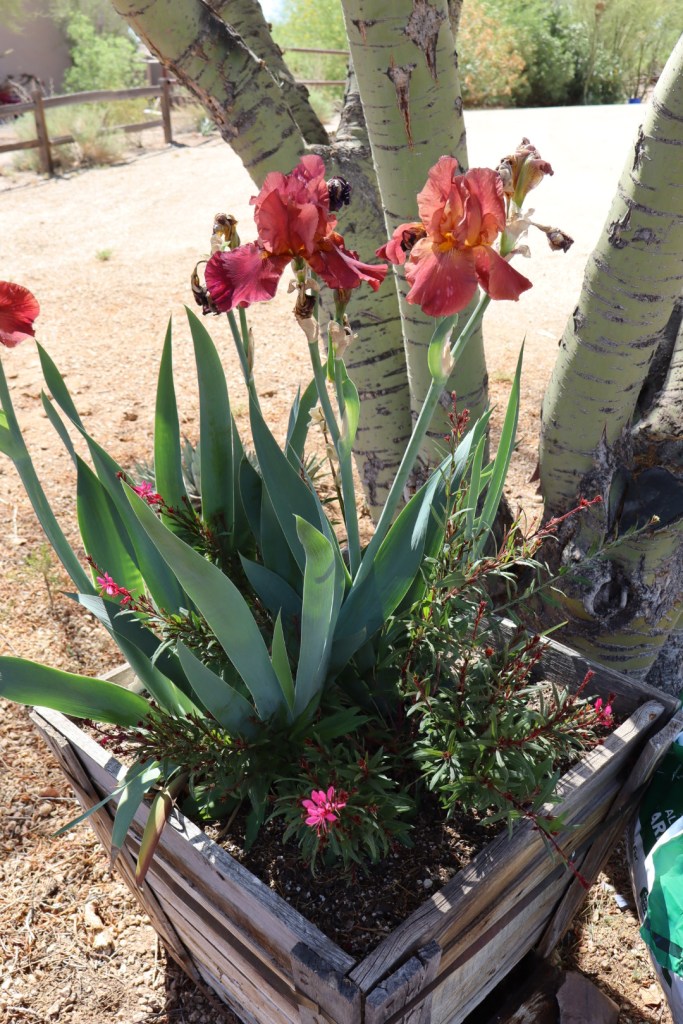
This exposure is great for a wide variety of plants. Afternoon and/or dappled shade are enough to make the difference for a lot of plants to thrive instead of just hang on through the summer.
Plants that are considered full sun in milder climates can usually thrive in afternoon shade in Phoenix. Some examples include lavender species, pittosporum, many Aloe species, hibiscus, and lots of other plants. Many fruit trees love having full sun in the morning with shade in the afternoon. Citrus thrives in this exposure. Just remember that tropical plants are usually accustomed to richer soil and will always appreciate added compost and mulch around their roots.
Many cacti do well with some shade too. It’s a common misconception that cacti all like the full intense sun. Golden barrels actually do best with some afternoon shade, though they can limp along in an exposure they don’t like. The argentine giant cactus (Echinopsis candicans), blue myrtillo (Myrtillocactus geometrizans), and easter lily cactus (Echinopsis subdenudata) are all examples of shade-enjoying cacti.
More Shade Than Sun

This type of area is a good opportunity to use tender plants that otherwise can’t be planted here. Star jasmine vines do really well in Phoenix if they’re protected well. Other shade loving plants include Mexican heather (Cuphea hyssopifolia), canna lily (Canna indica), foxtail and asparagus fern (Asparagus densiflorus and A. springeri), and snail vine (Vigna caracalla). Tropical bird of paradise (Strelitzia reginae) does well in protected shady corners.
Some plants can handle full sun during the winter but are actually better planted in shady spots if you want to keep them year-round. Salvia ‘Mystic Blue Spires’ is a great example. This beautiful perennial will bloom multiple times a year but is often planted as a winter annual because it’s not hardy over the summer. Protect this plant to enjoy it for years in the garden. The best permanent spot for a plant like Mystic Blue Spires takes advantage of the changing angle of the sun between seasons to provide more sun in winter than in summer.
No Direct Sun
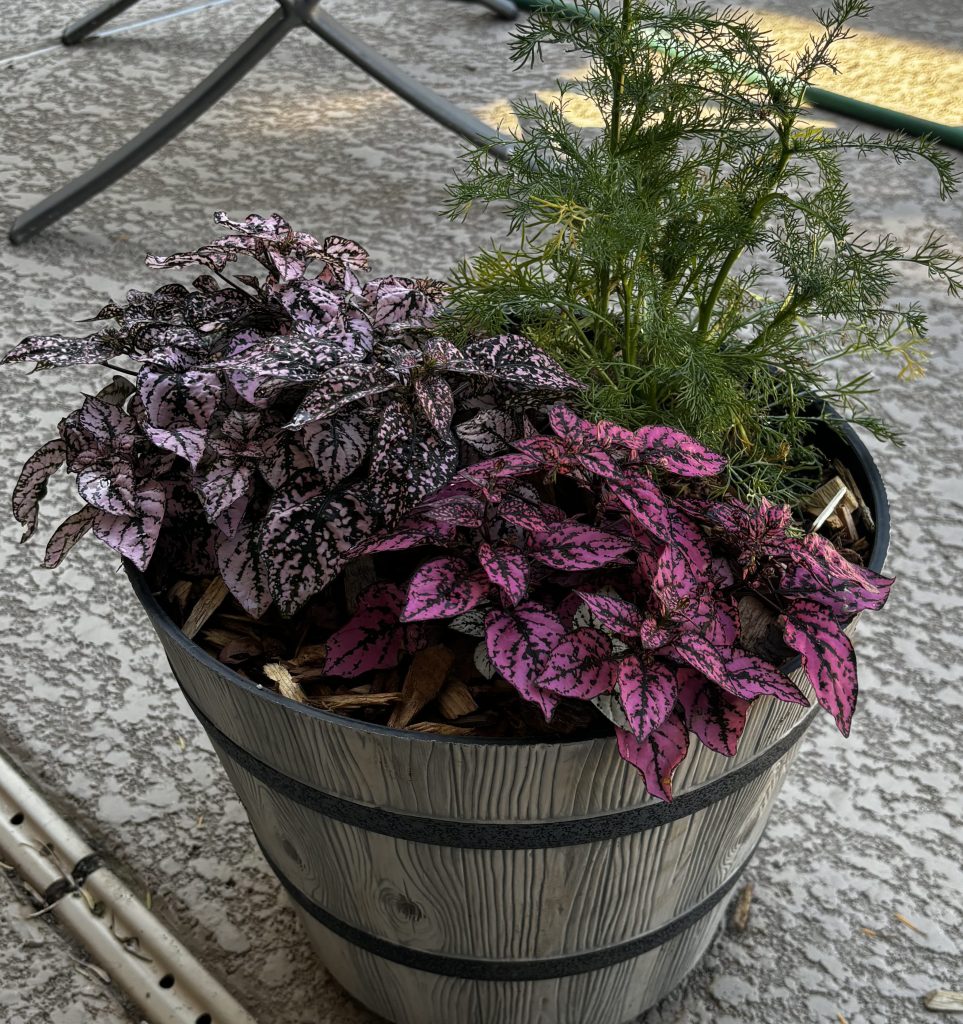
This type of spot is difficult to plant because we’re back to a limited palette of plants that are okay with this light exposure. However it’s also an opportunity to use a few plants that really can’t handle the sun here. The winter annual cyclamen is a good example. Other plants that can handle full shade include purple heart tradescantia (Tradescantia pallida) and the groundcover wedelia (Wedelia spagneticola).
What to do if a Plant is Getting Too Much Sun
A plant suffering from too much sun is stressed for a good portion of the year. When a plant is planted in too sunny of an exposure, it will either die quickly over the summer or hang on for a while but suffer major damage.
If a plant is newly installed and you’re starting to see signs that it was planted in too much sun (excessive wilting, sunburn, dieback) you still have time to dig it up and replant somewhere better.
Sometimes the best option is to create more shade. In Phoenix, the more shade we have the better. Palo verde trees create a light shade loved by many plants. Darker shade trees include Texas ebony and deciduous mesquites. Even growing a few large shrubs that don’t get trimmed down will create a good deal of shade for other plants. If there is a dire need to protect a plant such as a sunburned citrus tree, a shade sail on the west side of the plant will block the worst of the sun for the summer.
Light Exposure and Pest Control
A major component of the holistic (and professionally recommended) system of pest control called Integrated Pest Management is the idea that the right plant in the right place is naturally resistant to insects and disease. Plants are less likely to need any kind of intervention or pest control if they are receiving the amount of light they can handle here in Phoenix.
For example, a tropical hibiscus planted in full sun in Phoenix may survive but have repeated infestations of aphids, spider mites, thrips, or other obnoxious pests. The plant is less able to mount a defense against invading bugs. The full sun hibiscus will need regular interventions to stay alive, while a hibiscus planted on the east side of a house will be able to grow easily and happily.

Correct placement of plants in the low desert is a vast subject with a lot of considerations alien to more temperate climates. My customers know they can reach out to me anytime with their plant questions. My consultations are meant to give you the information you need about the yard you have. Otherwise my favorite sources are the ASU landscape library and the AMWUA landscape guide for the Phoenix area.
The next summer guide will be shorter and sweeter than this behemoth of a subject! I will go over the difficulties of container planting during the low desert summer and how to set up a healthy container garden. Stay tuned!
Follow my blog for more practical information about low desert landscaping from an AZ certified nursery professional and a Smartscape certified landscape designer for low desert gardens. Reach out using my contact form if you’d like to schedule a consultation and receive useful information for your landscape specifically.
 Paige Maloney | Arizona Landscape Designer
Leave a comment