
The first spring flowers are here-
Or rather the late winter flowers are here.
This time of year is a little awkward in terms of seasonal color in the garden. All the warm weather flowers are quiet and the spring flowers haven’t quite woken up yet. We still have a few option though.
The seasonality of the desert is incredible; the landscape changes so dramatically from winter to spring to summer due to the patterns of dormancy and active growth that shift the whole desert full of plants according to each species’ own internal clock.
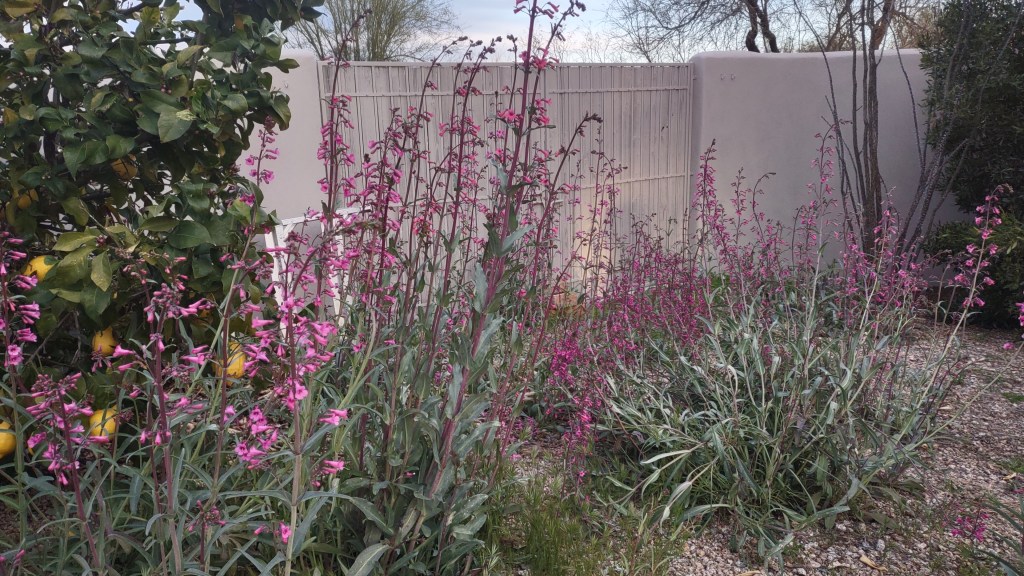
As gardeners we want to be able to cajole our plants into growing when we want and flowering when we want but we’ve all faced the fact that some plants just can’t be instructed like this. A Parry’s penstemon (Penstemon parryi) is only now waking up, for example, and its full magnificence can’t be rushed no matter what we do. We can grow them and take care of them all year but we will have to wait until the end of February to start enjoying the 4ft stalks of hot pink flowers that grow here in Arizona and almost nowhere else in the world. (Penstemon are in stock now in many places – buy them before they sell out!)
Different plants have their own conditions that trigger them to change into a new mode of growth. Many plants respond to the length of day – Texas sage eventually go dormant no matter how hot it is because the days are shorter. The seeds of some spring annuals have a different internal timer and won’t germinate until they feel a few winter storms pass over.
The way to achieve a desert garden with four seasons of color is to acknowledge the constraints of different plant species and plan ahead.
One plant species that blooms in February only is the red emu bush (Eremophila maculata). Most of the year it is a nondescript, well-behaved shrub that adds a bit of texture to the greenery. This time of year it bursts into bloom and transforms into an eye-catching flower display. ‘Valentine’ is a common cultivar of the red emu bush. Plant the red emu bush with a bit of afternoon shade and give it space for its eventual size.
The purple lilac vine (Hardenbergia violacea) is one of my favorite vines for shadier parts of the yard. The dark green foliage is evergreen and pleasant all year. Then for a few weeks in February it shows off gorgeous purple blooms. It’s quiet most of the time then LOUD.
This year we’re having some overlap with brittlebush season (Encelia farinosa). The first golden yellow flowers are starting to appear on this widespread native shrub. Brittlebush is a common sight in the desert, as it’s a plant that sprouts easily and grows in tough spots. They provide shade for seedlings and baby cacti, food for pollinators, and pop up everywhere. I like to let the seedlings take hold in my yard if they sprout in a location that won’t be in the way. They can get pretty big but there’s no harm in letting them grow and flower for a couple of years before removing them, if you choose. They’re free landscape plants.

Some desert plants spread easily, like the brittlebush and parry’s penstemon. For me it’s a good enough reason not to use pre-emergent – you’re not only preventing the weeds but the desirable desert plants too. But I understand why someone would choose to use pre-emergent because we’re about to hit weed season after these next few days of rainy weather.
Do you have a winter flower in your yard that is blooming right now? I would love to see more examples.
I’m available now for spring consults and landscaping work. Please don’t hesitate to reach out.
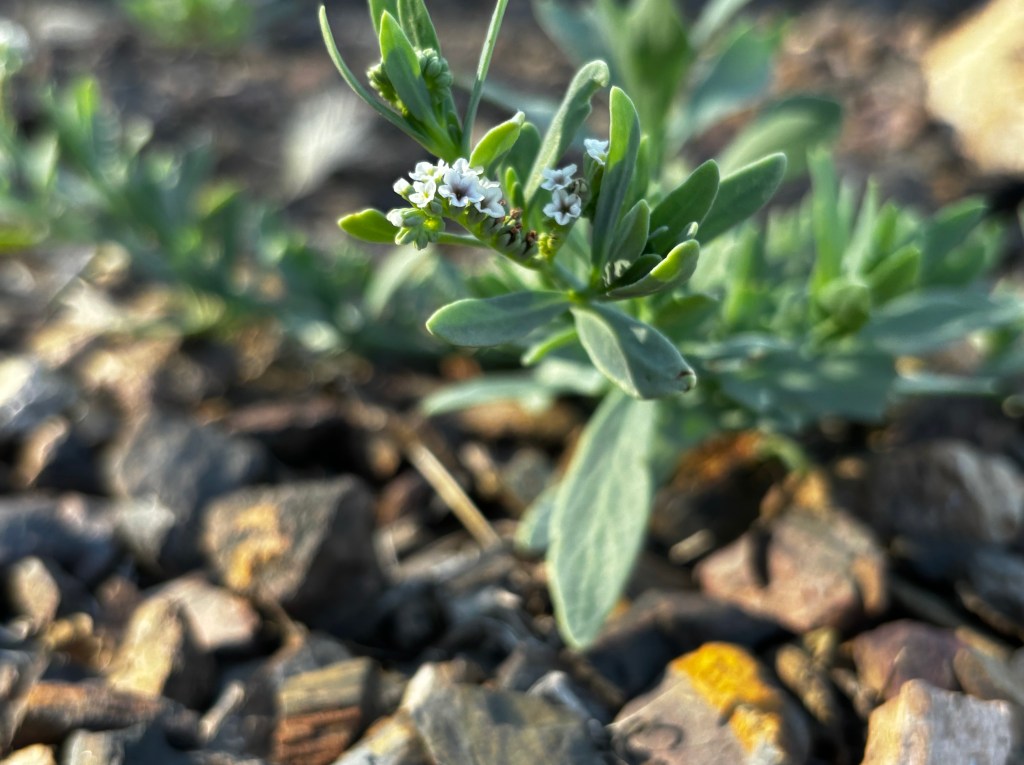
The featured image is a weed in my yard that I like. I’m trying to grow it out but it’s been stubborn so far.
 Paige Maloney | Arizona Landscape Designer