
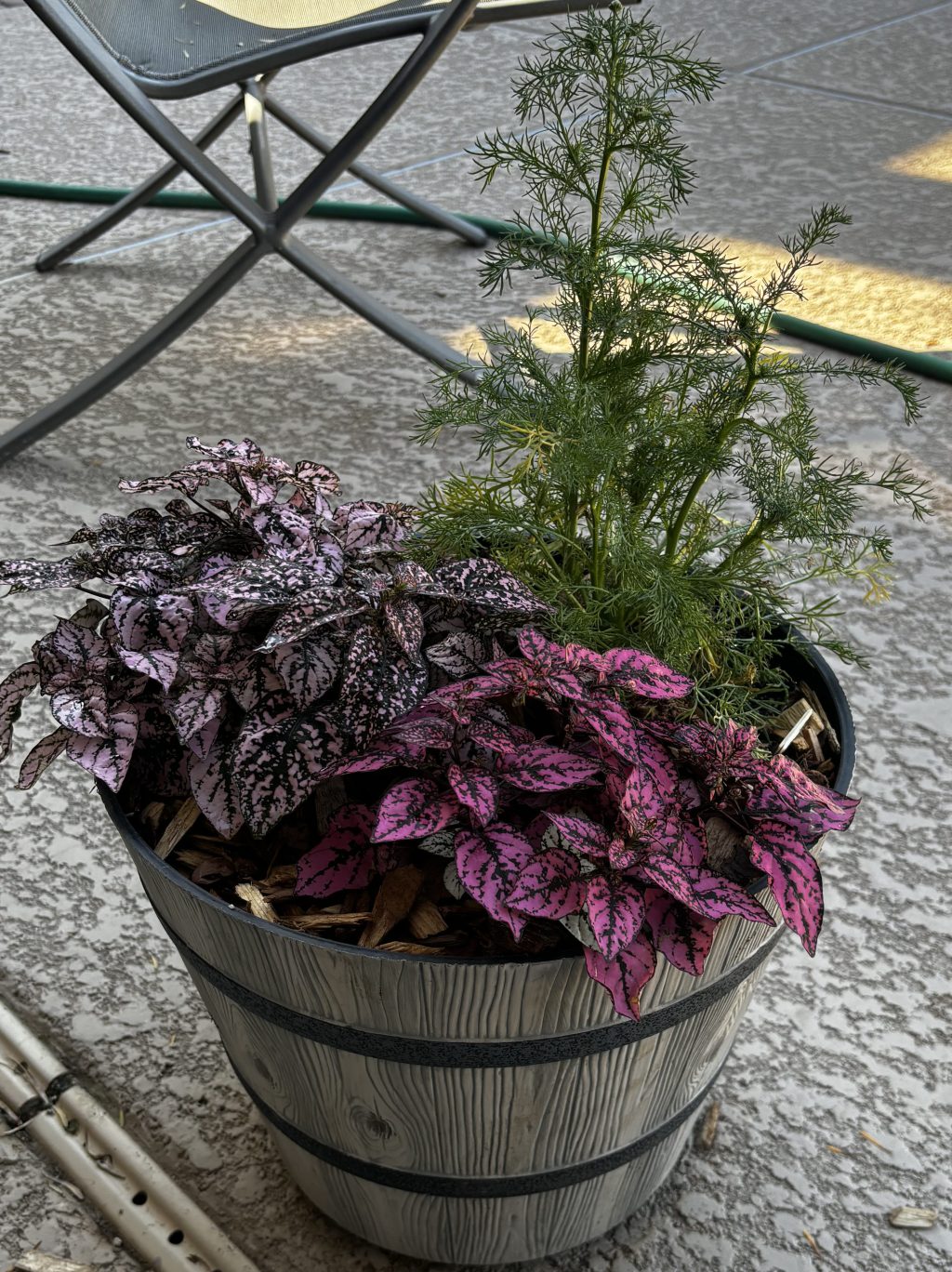
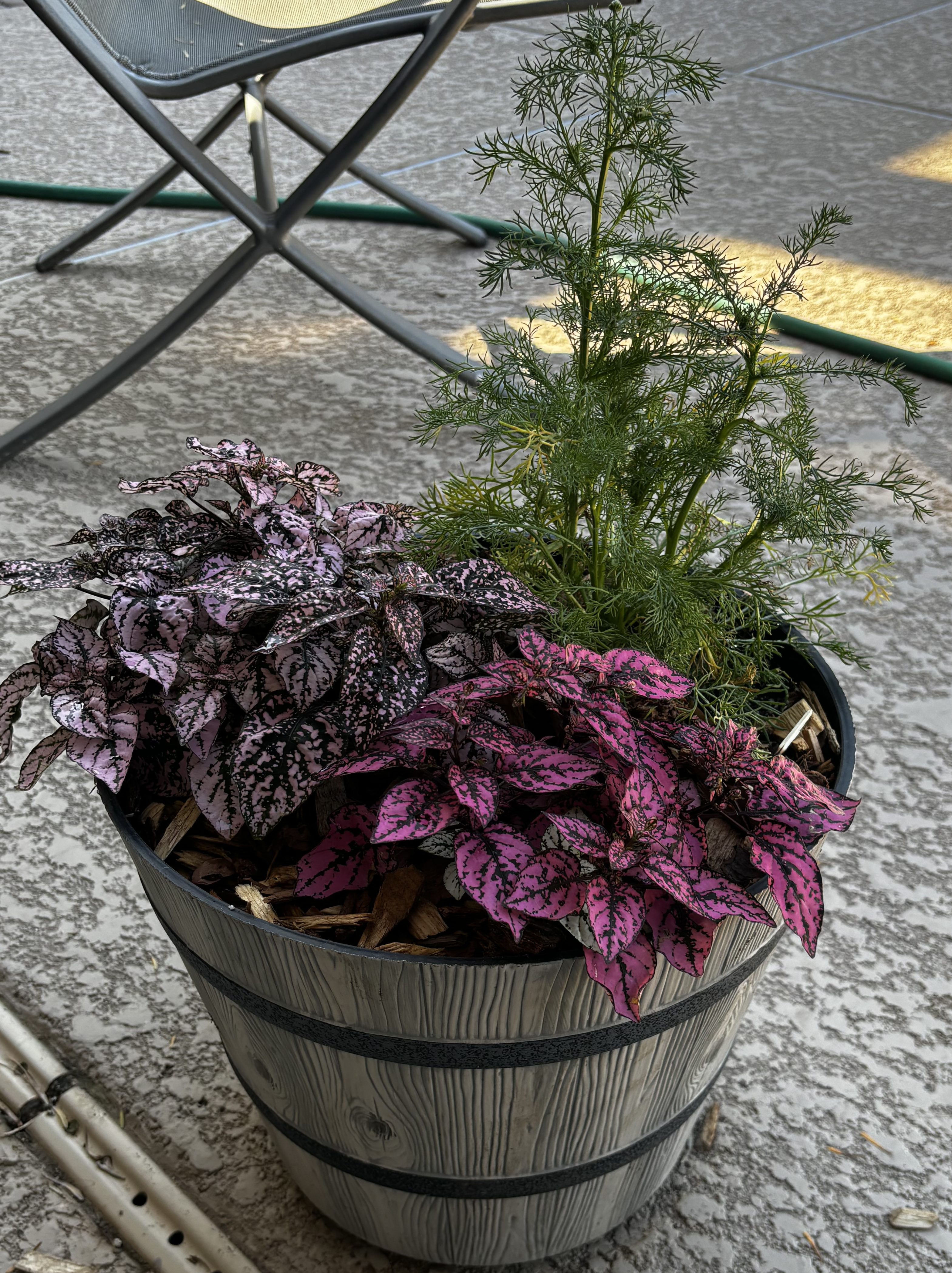
Mailbox Question:
Planting in the low desert has a steep learning curve for people who are more familiar with temperate climates. Obviously dealing with desert plants and our rocky soil and intense summer sun is going to be tricky when starting out; but setting up some annuals like petunias over the winter seems much more straight forward. After all, we use the same pots and the same potting soil and the same plants that beautify places all over the country. So why doesn’t it work as well here?
This question comes from a client who has pots hooked up to the irrigation system for watering. I did some work refreshing the containers and adding new plants and soil, and changing how the water was delivered. They asked, “Why do my plants still look thirsty if they’re on the irrigation system, and what can I do about it?”
My Answer:
This is the sort of question that can have several answers, depending on the specific situation. Maybe the irrigation system isn’t being run often enough for annuals in a pot. Maybe the soil itself is too light and is drying out quickly. Maybe the plants are in too much sun, or the soil is too exposed. Maybe the plants are outgrowing their pot and their roots are drinking up all the water too quickly. Maybe – and this is a big one – there are not enough emitters for the size of the pot and water is only being delivered to one area while the rest of the soil is permanently dried out.
I bolded this last possibility because it’s a common error. Potting soil works very differently compared to the clay soil that is common here in the valley. Clay spreads water out sideways and resists the downward movement of water. Potting soil absorbs water vertically, but the water doesn’t spread out over the surface of the container. So it’s very possible that a pot can be flooded on one side with water draining out all over the patio, while at the same time a huge section of potting soil is completely dry and therefore useless to the plant’s roots.
In this client’s case, it was a combination of improper emitter setup and the pots were in a sunny area and drying out quickly.
My solution was to change the emitters and add a thick layer of mulch. Instead of one 2gph emitter in the center of the pot, I made a loop of drip line to go around the edge of the pot, where the roots want to be. Roots like to spread out to the edges of pots because air penetrates better at the sides. So the loop of drip line with emitters every 6” will keep the soil evenly watered on every side, without flooding. I also added a .5gph emitter to the center of the pot to complete the watering system. I’ve found that 1gph or 2gph are usually too much for pots and will waste water, leech nutrients, stain concrete, or collect in saucers and provide habitat for mosquitos.
Important note:
Even after fixing the way water is delivered to the pot, keep in mind the soil may still be hydrophobic and may not be accepting water yet. It’s possible for potting soil (esp peat based) to dry out so much that it resists absorbing water. Soil that has been very dry for a long time may lose its structure and become less useful. Try watering the pot with a good amount from a watering can, over the whole surface of the pot. If you scratch the soil after watering and it reveals a dry layer underneath, you have hydrophobic soil. Mix a few drops of dish soap as a wetting agent into the watering can and water again. That should improve the absorption. Or, water small amounts often to prime the soil to accept water again.


 Paige Maloney | Arizona Landscape Designer