

This has been a terrible year for saguaro in the Phoenix area, which is unfortunate because this grand cactus is a proud and unforgettable symbol of our desert home. There are many reasons to want a saguaro in your landscape. They are striking, they require very little maintenance, they provide a vertical accent, and they feed wildlife with their flowers and fruit. But there are a few care/installation mistakes I see often as a nursery professional that probably contributed to the die-off this summer.
The Hardiest Cactus?
The common view of saguaro is that they’re desert-dwellers to the extreme. They love the sun and they love the heat. In cartoons we see them paired with tumbleweeds and desert mirages, growing where nothing else can take root. But it’s actually not the case.
Basically every single outdoor saguaro exists within a narrow region stretching from southern Arizona to northern Sonora, Mexico. Their success depends on many factors. Sometimes their range ends because it is too cold for them, like in Flagstaff and Nevada. They don’t occur naturally in deserts without a monsoon season. And they need a strong southern exposure to really thrive.
That being said, the low desert and the bajada here should be perfect for them. So what happened this year? Despite being such a hardy cactus, this summer was just too much for many cacti. And there are a few mistakes that are very common in the Phoenix area that might have contributed to their stress.
If you see something here that you’re doing in your yard, don’t panic. In many cases there’s something you can do about it.
Planted Near Irrigation
Let’s get this one out of the way. Try not to put any irrigation lines within six feet of your saguaro. This is easier said than done for existing landscaping because sometimes landscape designs don’t take this into account. But it’s really better not to have water running close to a saguaro because they need water roughly once a month or less, and many irrigation systems water every single day.
Best case scenario, everything is fine and you simply have a fat cactus for many years. Worse case scenario, it causes root rot and the cactus falls.
It’s more typical to have a saguaro do okay for some years until it gets stressed for some unrelated reason and the water becomes too much for it.
If you have any lines directly to the cactus, turn them off. If you have plants nearby, can you move them or cut back on their watering gradually? The most important thing is that the saguaro isn’t being watered directly at the base.
Planted Too Deep
This one might be harder to fix if you had a large cactus installed. Sometimes a saguaro is planted deeper than it was growing before, to help stabilize it as the roots grow in. They are very top-heavy plants and stakes can be unsightly.
However! The skin of the cactus (and many shrubs too) is not adapted for life underground like the roots are. The saguaro should be buried up to where the soil line already was, or even a bit higher to adjust for settling. The entire plant can be installed on a gentle mound to help with drainage and settling. Never plant a saguaro in a basin.
Being planted too deep might cause rotting quickly, or it might just look like a plant that fails to thrive and never grows very much. (I see this a lot with shrubs and small trees unfortunately.)
To diagnose this problem, compare your saguaro to pictures of wild-grown cacti. A saguaro that is planted too deep might be bright green all the way to the soil, or it might be unusually wide at the base. It may look wrinkled or off-colored if it’s already being affected by the planting.
Try to find where the roots connect to the base. If you can, take away a layer of soil until you see more of the base, and try to make sure water can drain away from the base of the cactus.
Ask a horticulturist if you’re not sure whether your saguaro was planted too deep or not.
Too Much Shade
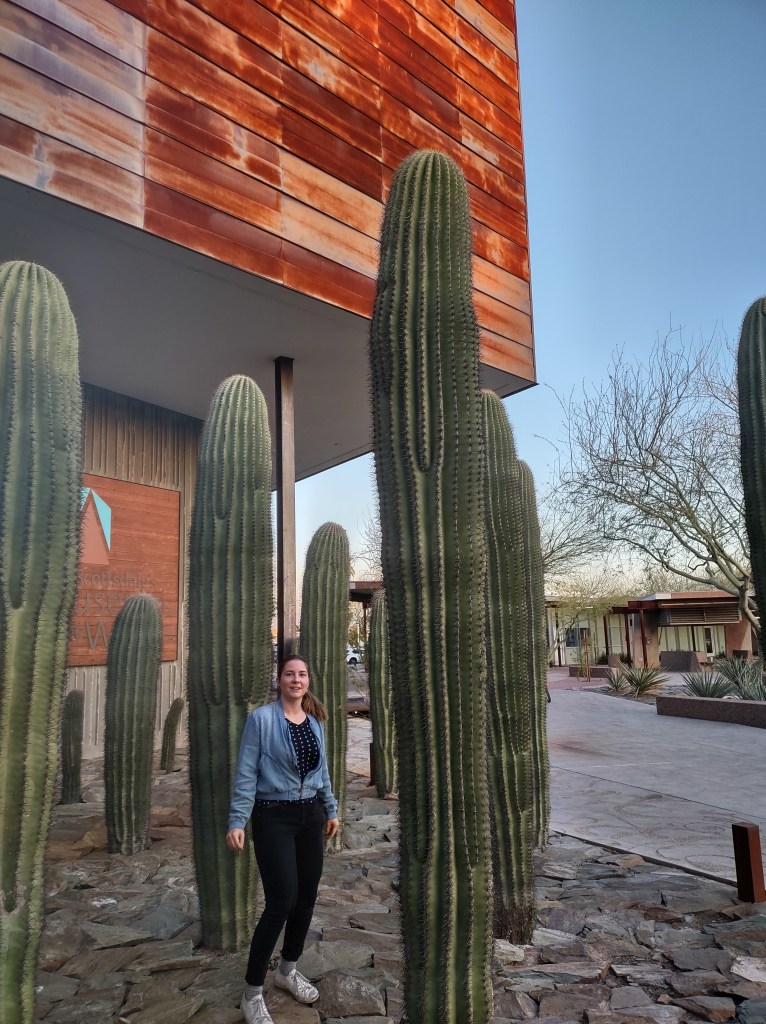
Adult saguaro like to have an uninterrupted southern exposure. They can handle a bit of shade, especially in the late afternoon. But too much shade causes problems. This is usually an issue for overcrowded gardens, when plants are installed close together when they’re small without taking in account their full size. It could also be a building shading the cactus or nearby trees.
A saguaro that doesn’t get enough light is susceptible to developing large holes in the side and may not thrive.
One solution is to trim branches in the winter to let through more light. There’s not much you can do if the problem is a building, but keep an eye on it until it grows taller than the building. Then it might turn around and do better – I’ve seen that happen before.
If it’s a small saguaro you might be able to move it to an area with more light. But don’t underestimate their weight- saguaro could weigh up to 100lbs per linear foot at their maximum size!
Don’t increase the number of hours of light during April through September though. You don’t want to burn your saguaro. During the winter you can trim branches and expose the cactus so that it has several months to adjust before the next summer.
Too Much Reflected Heat
Concrete isn’t natural. Saguaro aren’t used to being next to large driveways and tall walls. Sometimes a saguaro can be stressed by having too much light and heat being thrown back at it from a nearby surface. The areas immediately next to a wall or driveway might suffer from reflected heat.
This one isn’t as obvious as the other problems. It seems like everything is hot and sunny here during the summer. But if you stand next to a sunny wall during the warm season you’ll feel a great deal of extra warmth.
Roots don’t seem to like these conditions, and soil microbes definitely don’t. Southern and western exposures next to walls and driveways seem to have more degraded soil than other areas, if they’re not shaded. They dry out quicker and get to much higher temperatures than other areas of the garden. In short, areas with reflected heat create unfavorable microclimates for many plants.
Keep an eye on any plants in these conditions, and if you’re planning a garden, keep in mind that there are other plants that will do better here. Try red yucca (Hesperaloe parvifolia), a creosote (Larrea tridentata), or a red bird of paradise (Caesalpinia pulcherrima).
Baby Saguaro Need Different Conditions
Last point to note. Young saguaro need to grow up under a “nurse plant” that protects them from the sun and helps trap extra moisture until they are old enough to fend for themselves. Adult saguaro are incredibly tough but the saguaro under four or five years old need extra protection.
If you have a very young saguaro you bought at a nursery, know that it’s okay to water it more often and maybe even give it some shade in the afternoon. Young cacti need to stay hydrated and shaded because their roots are small and undeveloped. When I worked at a nursery growing our own saguaro from seed, we watered the little saguaro in 1 gallon pots just as often as other cacti – once a week during the hot and dry season. The seedlings we watered even more often.
This is more of a general rule for cacti. The younger a cactus is, the more water it needs, generally speaking. This is why some areas of the desert are suitable for growing cacti but don’t have any naturally grown saguaro. They might not be able to make it as a seedling and get past the tricky stage of development.
So Where Do I Plant?
A saguaro that is over three feet tall can be planted in well-draining soil, with an uninterrupted southern exposure, in a place that doesn’t freeze too often. Keep it at least six feet from any irrigation lines. Water by hand once or twice a month for the first year, or until it’s established. Then only water if it hasn’t rained all month. Get to know what your saguaro looks like when it’s thirsty and when it’s full of water and you can judge when it’s time to water again.
Double Check Before Planting
Saguaro are magnificent plants, and could stay in your yard for decades if cared for properly. They have a few peculiarities though. Before planting a saguaro, if you have any doubts, check with a horticulturist or nursery professional to make sure the site is suitable. Many nurseries have professionals on staff, although if you want to be sure you’re receiving good advice you can check with someone who has qualifications in Arizona horticulture.
Keep in mind I’m available for quick chats online if you’re looking for peace of mind with your designs. As a certified Nursery Professional with years of experience in Arizona horticulture, I can help you decide what to plant and where. And during the cool season I’m available for plantings.
Let me know if you’re looking for guidance and we can set up a phone call.
 Paige Maloney | Arizona Landscape Designer